
Introduction to Book about Digital Marketing
The digital world is booming, and marketing has shifted drastically from traditional billboards and TV ads to clicks, likes, and shares. If you’re serious about understanding how businesses thrive online, a book about digital marketing can be your ultimate guide. Unlike scattered online content, books give you a structured, in-depth approach to mastering this ever-evolving field.
Why Digital Marketing Matters in Today’s World
Let’s be real—almost everything we do today is connected to the internet. Whether it’s shopping, watching videos, scrolling through social media, or even ordering dinner, our lives are surrounded by digital touchpoints. That’s exactly why digital marketing matters more than ever. Businesses that want to stay visible, competitive, and profitable must meet people where they already are—online.
Unlike traditional marketing, which relies on flyers, TV, or radio ads, digital marketing allows companies to target specific audiences, track performance in real-time, and adjust strategies instantly. Imagine being able to know exactly how many people clicked your ad, how many bought your product, and how much revenue you made—all from one dashboard. That’s the power of digital marketing.
Another reason it matters? Cost-effectiveness. Small businesses can compete with big brands by running smart, budget-friendly campaigns. A well-planned social media strategy or SEO campaign can bring in more leads than a giant billboard on a busy street.
In short, digital marketing isn’t just an option anymore—it’s the backbone of modern business growth. Without it, you risk being invisible in a world where everyone’s eyes are glued to screens.
The Power of Learning Through Books
Now, you might wonder—why pick up a book about digital marketing when there are countless YouTube tutorials and online articles? Here’s the thing: books give you depth and structure that online content often lacks.
Think of it like building a house. You can watch quick videos on how to lay bricks, but without a blueprint, your structure will collapse. A book provides that blueprint—it guides you step by step, from the foundation of digital marketing to advanced strategies.
Books also offer something the internet can’t always guarantee: credibility. Most digital marketing books are written by industry experts who have years of experience, case studies, and proven methods. This means you’re not just learning random hacks—you’re learning strategies that have worked in real businesses.
Plus, reading a book allows you to focus without distractions. No pop-up ads, no endless scrolling, no jumping between tabs. Just you, the author, and a journey into mastering digital marketing at your own pace.
In essence, learning through books gives you a solid, reliable, and comprehensive knowledge base. Combine that with hands-on practice, and you’ll be unstoppable in the digital marketing world.
Read More:
Definition and Scope of Digital Marketing
Digital marketing can be defined as the use of digital channels, platforms, and technologies to promote products, services, or brands to a targeted audience. Unlike traditional marketing methods such as TV commercials or print ads, digital marketing is interactive, data-driven, and measurable.
Its scope is incredibly vast because it covers every online activity where a brand can connect with potential customers. From Google searches and social media platforms to email inboxes and mobile apps, digital marketing touches nearly every corner of the digital world.
The real beauty of digital marketing lies in its flexibility. Whether you’re a small business owner trying to reach local customers or a global corporation targeting millions worldwide, digital marketing allows you to customize strategies that fit your goals, budget, and audience. And since technology continues to evolve, the scope of digital marketing will only keep expanding—introducing new tools, platforms, and trends.
Core Components of Digital Marketing
To get a complete picture of digital marketing, you need to understand its core components. Each one plays a unique role, and when used together, they create a powerful, well-rounded strategy.
SEO (Search Engine Optimization)
SEO is the act of making your website more “visible” when someone types in a business-related phrase on search engines like Google. Higher rankings translate into more organic traffic without the need for paid advertisements.
Key aspects of SEO include keyword research, on-page optimization (like content and meta tags), off-page optimization (like backlinks), and technical SEO (like site speed and mobile-friendliness). Done well, SEO brings in long-term, consistent traffic.
Content Marketing
If SEO is the backbone, then content is the heart of digital marketing. Content marketing is about creating and sharing valuable material—blogs, videos, podcasts, eBooks, infographics—that educates, entertains, or solves a problem for your audience.
High-quality content builds trust, establishes authority, and keeps people coming back. It’s not about pushing sales all the time—it’s about providing value first so customers naturally choose you when they’re ready to buy.
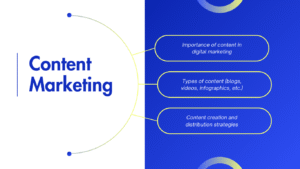
Content Marketing
Social Media Marketing
Social media is where people spend a huge chunk of their time, making it a goldmine for businesses. Social media marketing involves using platforms like Facebook, Instagram, TikTok, LinkedIn, and Twitter (X) to connect with your audience, promote your brand, and drive engagement.
It’s not just about posting pretty pictures. It’s about creating conversations, building communities, and turning followers into loyal customers. Social media also allows for precise targeting and advertising, ensuring your message reaches the right people.
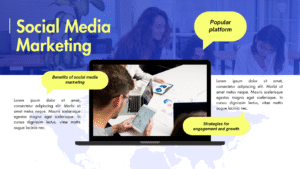
Social Media Marketing
Read More:
Email Marketing
Despite being one of the oldest digital tools, email marketing is still one of the most powerful. It allows businesses to connect directly with customers in their inbox—a personal space that most people check daily.
With email, you can send newsletters, product updates, promotions, or personalized offers. A strong email list is like having a direct line to your most engaged audience, and with automation tools, you can nurture leads effortlessly.
Paid Advertising (PPC & Display Ads)
Sometimes, businesses need quick results. That’s where paid advertising comes in. Pay-per-click (PPC) campaigns, like Google Ads, put your website at the top of search results instantly. Display ads (banners, videos, etc.) help you reach wider audiences across different websites and platforms.
The best part? You can track every click, view, and conversion, making it easy to measure ROI. With smart targeting and budgeting, even small businesses can compete with bigger brands in the digital space.
Together, these components form the foundation of digital marketing. While each can work on its own, the magic happens when they’re combined into a cohesive, integrated strategy that attracts, engages, and converts customers.
Depth vs. Online Articles and Blogs
If you’ve ever Googled “digital marketing tips,” you’ve probably noticed how overwhelming the results can be. Articles and blogs are everywhere, but most of them give you quick, surface-level information. They’re great for bite-sized knowledge, but they rarely go into the kind of depth you need to truly master a subject.
That’s where a book about digital marketing stands apart. Books are carefully structured to cover concepts in detail, often starting with the basics before moving into advanced strategies. Instead of leaving you with unanswered questions, they provide a comprehensive, step-by-step learning journey.
Think of it like snacking vs. eating a full meal. Blogs are like snacks—quick, light, and sometimes enough. But a book? That’s a full-course meal that leaves you satisfied and gives you the energy (knowledge) to take real action.
Structured Knowledge for Beginners and Experts
One of the biggest strengths of books is their organization. A well-written digital marketing book takes you on a logical path, so you don’t feel lost in random information. Beginners get to build strong foundations, while experts find advanced insights and strategies to sharpen their skills.
For example, a beginner might start with chapters on SEO basics, while a seasoned marketer can skip ahead to advanced analytics or scaling ad campaigns. Books cater to different levels of expertise without overwhelming or underserving the reader.
Unlike online content, which is often scattered and unverified, books bring clarity and structure. It’s like having a personal mentor walk you through the entire process instead of picking up random tips here and there.
Practical Case Studies and Real-Life Examples
Theory is great, but without practice, it’s just words on paper. The best digital marketing books don’t just tell you what to do—they show you how it’s done through real-life examples and case studies.
These case studies provide insights into how businesses—both small and large—implemented specific strategies to achieve results. For instance, a book might detail how a startup used content marketing to triple its website traffic, or how a global brand leveraged social media ads to boost sales.
This is powerful because it bridges the gap between theory and application. When you see real-world results, it’s easier to apply the same tactics to your own business or career. In other words, books give you the kind of hands-on learning that blogs and short articles often miss.
Step-by-Step Guidance
One of the most valuable things a digital marketing book offers is step-by-step guidance. Unlike short online articles that often leave you with more questions than answers, books are designed to take you through a clear journey. They typically start with the basics—like understanding what digital marketing is—and then move into advanced tactics, such as building conversion funnels or running paid ad campaigns.
This structured approach ensures you’re not just picking up random bits of information. Instead, you’re building knowledge layer by layer, the same way you’d learn a skill like cooking or playing an instrument. By the end, you’re not just aware of the concepts—you know how to apply them.
Updated Strategies Aligned with Trends
Digital marketing is constantly evolving. What worked five years ago may not work today, and what works now might be outdated in just a year. A good digital marketing book acknowledges this reality and provides strategies that align with the latest trends and technologies.
For instance, a modern book won’t just cover SEO basics—it’ll discuss how voice search, AI, and mobile-first indexing are changing the game. It won’t just talk about Facebook ads; it’ll dive into TikTok, Instagram Reels, and influencer collaborations too.
By choosing a book that’s regularly updated or recently published, you ensure you’re learning strategies that actually work in today’s digital world.
Actionable Tips and Tools
The best digital marketing books don’t just give you theory—they give you actionable tips and tools you can start using right away. These might include:
-
Checklists for optimizing your website
-
Templates for email campaigns
-
Tools for tracking analytics
-
Examples of ad copy that converts
These practical resources make it easier to apply what you learn. Instead of wondering, “Okay, but how do I do this?” you’ll have clear instructions and ready-to-use tools at your fingertips. It’s like having a toolbox that equips you for every digital marketing challenge.
Easy-to-Understand Language
Let’s face it—marketing jargon can be intimidating. Terms like “conversion rate optimization” or “programmatic advertising” might sound complex, but the right book will explain them in simple, relatable language.
Great digital marketing books are written with the reader in mind. They avoid unnecessary complexity and instead use analogies, examples, and everyday language to make learning enjoyable. You shouldn’t need a marketing degree to understand the concepts—whether you’re a beginner or an experienced professional, the language should be approachable and easy to follow.
When learning feels simple, you’re more likely to stay motivated, finish the book, and actually use the knowledge to grow your business or career.
Recommended Books About Digital Marketing
Best Books for Beginners
If you’re just starting out in the world of digital marketing, it’s important to pick books that simplify the concepts and give you a strong foundation. Beginner-friendly books focus on explaining the basics without overwhelming you with too much technical detail.
Some excellent choices include:
-
“Digital Marketing for Dummies” by Ryan Deiss and Russ Henneberry – A straightforward, beginner-friendly guide that breaks down everything from SEO to email marketing in easy-to-understand steps.
-
“Marketing 4.0” by Philip Kotler – Written by the father of modern marketing, this book bridges the gap between traditional and digital marketing while highlighting consumer behavior in the digital age.
-
“The 1-Page Marketing Plan” by Allan Dib – A practical guide that shows you how to create a clear and simple marketing strategy without the fluff.
These books are perfect for beginners because they teach the why and how behind digital marketing while keeping the content approachable.
Advanced Books for Professionals
For those who already have a grasp on digital marketing basics, advanced books dig deeper into strategy, data, and execution. These are written for professionals who want to refine their skills, scale their campaigns, and stay ahead of competition.
Recommended reads include:
-
“Digital Marketing Strategy” by Simon Kingsnorth – A detailed guide on creating, implementing, and measuring advanced digital marketing campaigns.
-
“Killing Marketing” by Joe Pulizzi and Robert Rose – This book challenges traditional marketing thinking and shows how businesses can turn marketing into a profit center.
-
“Building a StoryBrand” by Donald Miller – While not purely digital, this book is excellent for advanced marketers who want to master storytelling and branding in the online space.
These books are ideal for marketers who want to move beyond the basics and develop data-driven, high-level strategies.
Niche-Focused Books (SEO, Social Media, Content, etc.)
Sometimes, you don’t want a broad overview—you want to dive deep into a specific area of digital marketing. That’s where niche-focused books come in handy. They allow you to specialize in one skill and become an expert in that domain.
A few must-reads by niche:
-
SEO: “The Art of SEO” by Eric Enge, Stephan Spencer, and Jessie Stricchiola – A comprehensive resource for mastering search engine optimization.
-
Content Marketing: “Everybody Writes” by Ann Handley – Perfect for those who want to create engaging, high-quality content that connects with readers.
-
Social Media Marketing: “Jab, Jab, Jab, Right Hook” by Gary Vaynerchuk – A practical guide on how to create content tailored for different social media platforms.
-
Email Marketing: “Email Persuasion” by Ian Brodie – A focused book on building relationships and sales through effective email campaigns.
These books are fantastic for marketers who want to sharpen their expertise in one area and become specialists rather than generalists.
How to Choose the Right Digital Marketing Book
Identify Your Current Skill Level
Before picking up a digital marketing book, the first step is to understand where you stand right now. Are you a complete beginner who doesn’t know what SEO or PPC means? Or are you already familiar with the basics and looking to refine your skills?
If you’re a beginner, you’ll want books that explain concepts in plain language and provide easy-to-follow guidance. Jumping into highly technical material too soon can feel overwhelming and discouraging. On the other hand, if you’re already experienced, you don’t want to waste time on entry-level guides—you’ll need more advanced books that challenge you and help you level up.
By identifying your skill level, you’ll save time, avoid frustration, and choose books that truly match your learning needs.
Match the Book With Your Goals
Every marketer has different goals, and the right book should align with yours. Ask yourself:
-
Do you want to start a career in digital marketing?
-
Are you looking to grow your business with online strategies?
-
Do you want to specialize in one area, like SEO, content marketing, or social media?
For example, if your goal is to build a career, a comprehensive book covering all aspects of digital marketing might be the best fit. But if you’re a small business owner looking to improve your email campaigns, a niche-focused book would be more effective.
Choosing a book with your goals in mind ensures that what you learn is practical and immediately useful in achieving what you’re aiming for.
Look for Author Expertise and Credibility
Not all digital marketing books are created equal. With so many options available, it’s essential to consider who wrote the book. Look for authors with proven experience in the field—marketers, business owners, consultants, or thought leaders who have a track record of success.
An author’s background gives you confidence that the advice is based on real-world experience, not just theory. You can usually spot this by checking their professional history, other works they’ve published, or even online presence (blogs, podcasts, or LinkedIn profiles).
Credible authors bring authentic insights, case studies, and lessons that you won’t find in generic content. This makes the book not only trustworthy but also far more valuable for your growth.
Gain Clarity and Strong Fundamentals
One of the biggest benefits of reading a digital marketing book is the clarity it brings. Online content can often feel scattered—one blog talks about SEO, another about Instagram ads, and before you know it, you’re juggling half-baked knowledge from ten different places.
A book, on the other hand, gives you a clear, structured foundation. It connects the dots, explains why certain strategies matter, and shows you how all the pieces of digital marketing fit together. With this solid base, you’re not just memorizing tactics—you’re understanding the “why” behind them. That understanding helps you make smarter decisions when applying strategies in real life.
Stay Ahead of Competition
Digital marketing is a fast-moving game. New platforms emerge, algorithms change, and consumer behaviors shift. If you rely only on outdated information, you’ll quickly fall behind while competitors move ahead.
Books—especially recently published ones—give you insights into current trends and future directions. By reading them, you learn strategies that keep you adaptable and ready to pivot when changes happen.
Think of it like this: in business, knowledge is power, and in digital marketing, updated knowledge is your competitive edge. The more informed you are, the easier it is to outsmart the competition and stay visible to your audience.
Boost Career and Business Opportunities
Whether you’re a professional marketer or a business owner, digital marketing books can open doors. For job seekers, having a deep understanding of digital marketing makes you more valuable to employers. It shows initiative, dedication, and a willingness to keep learning.
For entrepreneurs, these books act as a playbook. They teach you how to attract customers, grow your brand, and scale your business without always needing to hire expensive agencies. Imagine having expert advice at your fingertips, guiding you to make smart moves that directly boost your revenue.
In short, the knowledge you gain from digital marketing books can translate into better career prospects, higher income, and stronger business growth.
Case Studies from Popular Books
One of the reasons digital marketing books stand out is their use of real-world case studies. These aren’t just theories or generic advice—they’re stories of how actual companies applied strategies and achieved results.
For example, in “Jab, Jab, Jab, Right Hook” by Gary Vaynerchuk, you’ll find case studies showing how brands used tailored social media content to connect with audiences. Instead of blasting out the same ad everywhere, they customized messages for each platform—and the results spoke for themselves in higher engagement and sales.
Similarly, “Building a StoryBrand” by Donald Miller includes case studies of businesses that transformed their marketing by simplifying their message. By focusing on storytelling instead of jargon, they attracted more loyal customers.
These case studies work like mini roadmaps. They let you see exactly what worked, what didn’t, and why—so you can avoid mistakes and replicate success.
How Businesses Applied the Strategies
What makes these examples so powerful is seeing how businesses actually implemented the strategies step by step. It’s one thing to read about SEO or email funnels, but it’s another to watch a brand put those tactics into action and measure results.
For instance, a case study on SEO might show how a small business optimized its website with the right keywords, improved loading speed, and started ranking on Google’s first page within months. Or an email marketing case study might reveal how a company built a list, segmented it, and boosted conversions by personalizing their campaigns.
These applications prove that digital marketing isn’t just theory
Books vs. Online Courses
In today’s learning world, books and online courses often go head-to-head. Both are powerful tools, but they serve slightly different purposes.
Books are fantastic for building a strong foundation. They dive deep into concepts, offer structured learning, and let you explore ideas at your own pace. They’re usually written by industry veterans, which means you’re getting insights backed by years of experience. Plus, books are affordable and easy to revisit whenever you need a refresher.
On the other hand, online courses shine when it comes to hands-on learning and interactivity. They often include video tutorials, exercises, quizzes, and live sessions that let you apply knowledge in real time. Courses can also be updated faster than books, keeping the material aligned with the latest trends.
The truth is, it doesn’t have to be books versus courses—it can be books and courses. Together, they provide a well-rounded approach to mastering digital marketing.
Combining Books with Practical Application
Reading a book on digital marketing is like learning the rules of a game. But to truly master it, you need to play the game. That’s where practical application comes in.
When you read about SEO, try optimizing a blog post right away. If you study email marketing, build a small email campaign and test subject lines. Learning about social media ads? Create a small budget campaign and track the results.
This combination of theory and practice ensures the knowledge sticks. Books give you the why and how, while hands-on work gives you the experience and confidence. Together, they make you not just a reader but a doer—someone who can turn ideas into real results.
Take Notes and Highlight Key Concepts
Reading a digital marketing book isn’t like reading a novel—you don’t just flip through the pages and move on. To get the most out of it, you need to actively engage with the content. One of the best ways to do this is by taking notes and highlighting key ideas.
Mark sections that stand out, jot down strategies that you’d like to try, and write quick reminders of insights that click with you. This way, you’re not just reading passively—you’re creating a personal reference guide you can come back to anytime. Your notes will also make it easier to connect the dots between chapters and apply what you’ve learned.
Apply Learnings Immediately
Knowledge without action is wasted potential. As soon as you pick up a new strategy from a book, try applying it right away. For example, if you learn about the importance of keyword research, spend some time running keyword tools and optimizing your website content.
When you apply concepts quickly, the ideas stick better because you’re reinforcing them with real-world practice. Even small experiments—like testing an email subject line or tweaking a social media caption—can help you see how theory translates into results.
The earlier you apply what you learn, the faster you’ll build confidence and practical skills.
Revisit and Refresh Knowledge
Digital marketing isn’t something you learn once and forget—it’s a field that evolves constantly. That’s why it’s important to revisit your books and notes regularly. Rereading sections can give you fresh insights, especially once you have more hands-on experience.
Sometimes a strategy that felt confusing the first time makes perfect sense after you’ve worked on a real campaign. Other times, revisiting a book can remind you of tactics you’ve overlooked but could still be valuable.
By refreshing your knowledge regularly, you ensure you’re always improving, always adapting, and always staying sharp in a fast-changing digital world.
Reading Without Practicing
One of the biggest mistakes people make when reading a digital marketing book is treating it like theory only. Sure, you can breeze through chapters and understand the concepts, but if you don’t practice what you learn, it won’t translate into results.
Digital marketing is a hands-on skill. You can read about SEO all day long, but until you actually optimize a website or run a campaign, the knowledge won’t stick. To avoid this mistake, treat every chapter as an action plan. Learn a concept, then immediately test it out, even on a small scale. That’s how you move from knowing to doing.
Jumping Between Too Many Books
Another common trap is trying to read five different digital marketing books at once. While enthusiasm is great, this approach usually leads to confusion and overwhelm. Each book has its own style, framework, and strategies, and when you mix them all without finishing one, you end up with scattered knowledge.
Instead, focus on one book at a time. Finish it, apply the lessons, and then move on to the next. Think of it like climbing stairs—you need to step on one firmly before moving to the next. This way, your learning stays structured and practical rather than messy and unfinished.
Ignoring Updates and Trends
Digital marketing changes fast. What worked a couple of years ago might already be outdated today. If you rely only on old books or ignore new updates, you risk applying strategies that no longer deliver results.
For example, social media algorithms, SEO ranking factors, and advertising platforms evolve constantly. A strategy from a book published five years ago might not be effective now. That’s why it’s important to combine your book knowledge with ongoing learning—blogs, podcasts, and updated editions can help you stay current.
By avoiding this mistake, you ensure that your marketing skills are not just strong, but also relevant and future-ready.
Podcasts and Blogs
Books are excellent for deep, structured learning, but if you want to stay updated with the latest news, tools, and trends, podcasts and blogs are your best friends. They’re quick, accessible, and often feature insights from industry experts who are working on real campaigns right now.
Podcasts are great for learning on the go—you can listen while commuting, exercising, or even doing chores. Blogs, on the other hand, often provide quick guides, updates on algorithm changes, and practical “how-to” posts you can apply immediately. Together, they act like your real-time marketing newsfeed, keeping you sharp and informed.
Online Courses and Workshops
If books give you theory, online courses and workshops provide practical demonstrations and interactive learning. Many courses include video tutorials, assignments, and even live Q&A sessions that let you practice what you’re learning step by step.
Workshops—whether virtual or in-person—go a step further by letting you interact with trainers and peers. This makes learning more hands-on and engaging. For example, you might take a course on Google Ads, then practice building campaigns in real time with expert feedback.
Combining books with courses ensures you’re not just learning ideas but also seeing how professionals implement strategies in the real world.
Networking and Communities
Learning digital marketing doesn’t have to be a solo journey. Joining online communities, forums, or networking groups can accelerate your growth by connecting you with like-minded learners and experienced professionals.
Communities on LinkedIn, Reddit, or even private Facebook groups allow you to ask questions, share ideas, and learn from others’ experiences. Networking also opens up opportunities for collaboration, mentorship, and even job offers.
By surrounding yourself with a supportive network, you gain access to insights and encouragement that books alone can’t provide. It’s like having a study group for digital marketing where everyone pushes each other forward.
Future of Digital Marketing Knowledge